Boost Your Practice in CT: Local SEO Tips for Medical Professionals
Elevate your medical practice with clear, local SEO strategies that help the right patients find you—without resorting to aggressive, “salesy” tactics. That’s the same philosophy GYBO used to help the Center for Hernia Repair grow sustainably while preserving a high standard of care and communication.
Understanding Local SEO for Medical Practices in the Connecticut Region
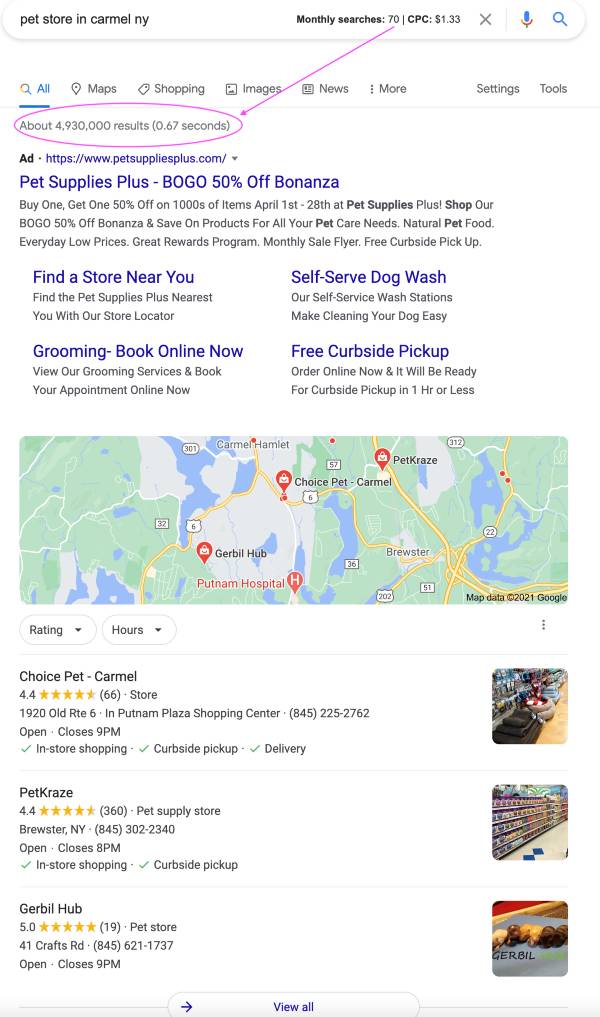
Local SEO (Search Engine Optimization) is the process of making your practice easier to find in local searches like “doctor near me” or “[specialty] in [city].” It connects what you do in real life with what patients see in Google Search and Maps.
It involves optimizing your website, your Google Business Profile, online reviews, and local directory listings so patients get accurate, trustworthy information wherever they look.
Local SEO is especially important in healthcare because patients now research providers online first, comparing proximity, services, and reviews before they ever call or book.
When local SEO is handled with clarity and quality—rather than hype—it supports the kind of steady, qualified growth we saw when shaping the Center for Hernia Repair’s content and structure around genuine expertise and patient needs.
The Importance of Local SEO in the Healthcare Industry
Healthcare decisions are personal, time-sensitive, and often high stakes, which means patients want nearby options they feel they can trust. Local SEO helps your practice appear in those key local moments: symptom searches, specialist searches, and “near me” queries.
Showing up clearly in map results and local listings makes it more likely that people in your area will see your practice as a realistic option, especially when your information is consistent and up to date.
Local SEO also reinforces your reputation by aligning your online presence with the experience you aim to deliver—professional, calm, and patient-centered, rather than pushy.
When we worked with the Center for Hernia Repair, the goal was to stay relevant and visible among national competitors while maintaining a high-quality tone, not aggressive marketing; local SEO was a key part of that balanced approach.
Key Local SEO Ranking Factors for Medical Professionals in CT
Several core signals influence how your practice performs in local search results. Understanding them lets you focus on practical changes rather than guesswork.
- NAP consistency: Your Name, Address, and Phone must be identical across your website, Google Business Profile, and directories; discrepancies can hurt both rankings and patient trust.
- Local citations: Listings on platforms like Google, Yelp, Healthgrades, Zocdoc, and local business or association sites act as “confirmation points” that your practice is real and located where you say it is.
- Relevance and proximity: Search engines consider how well your services match a query and how close you are to the searcher, so clear service descriptions and correct addresses are crucial.
- Engagement and reviews: Clicks, calls, direction requests, and review activity around your listing all help search engines see that your practice is active and useful to local patients.
In our medical case study, we combined these fundamentals with better site architecture and internal linking, which helped search engines understand and surface the most important services more often.
Optimizing Your Google My Business Listing
Google My Business (now Google Business Profile) is often the first interaction someone has with your practice, sometimes even before they see your website. Treat it as a concise, high-importance snapshot of your practice.
Focus on:
- Claiming and verifying your profile, then matching your name, address, phone, and hours to your website and other listings.
- Selecting accurate categories and adding a services list written in patient-friendly language rather than internal jargon.[
- Uploading photos of your exterior, waiting area, treatment rooms, and team to reduce uncertainty for new patients.
- Using Posts for simple, informative updates—holiday hours, seasonal reminders, or new services—rather than constant promotions.
When we refined on-page SEO and local signals for the Center for Hernia Repair, this kind of clarity supported substantial gains in organic traffic and keyword rankings while keeping the messaging aligned with the physician’s professional standards.
Building Local Citations and NAP Consistency
Local citations are mentions of your practice’s name, address, and phone number on other sites, and they act as a network of references that support your local visibility.
For medical professionals, that typically includes general sites (Google, Yelp), healthcare-specific platforms (Healthgrades, Zocdoc), and local or regional directories.
A practical approach:
- Audit existing profiles and update old phone numbers, addresses, or URLs so everything matches exactly.
- Merge or remove duplicates that might split reviews or confuse patients.
- Add your practice to a small, high-quality set of additional directories rather than chasing hundreds of low-value listings.
In our own work, we pair citation clean-up with technical improvements—like better internal linking and schema markup—so search engines have a consistent, structured view of the practice across channels.
The Role of Patient Reviews in Local SEO
Patient reviews play a dual role: they influence search visibility and strongly guide patient decision-making.
People tend to scan both overall ratings and specific comments about bedside manner, communication, wait times, and staff interactions before choosing a provider.
From a local SEO perspective, reviews can:
- Improve click-through when strong ratings appear directly in Google’s local results.
- Add natural language about conditions and treatments that further clarifies what you do.
- Signal ongoing activity when new reviews appear regularly and receive thoughtful responses.
In our case study, the focus was on honest, high-quality communication rather than aggressive review solicitation; this kind of steady, authentic reputation-building aligns with long-term trust and search performance.
Creating Location-Specific Content for Your Practice in Connecticut
Location-specific content connects your clinical expertise with the communities you serve. Instead of only listing services, you explain those services in context: who they’re for, what they address, and where they’re available.
Useful ways to do this include:
- Creating service pages that combine condition, treatment, and location (for example, “minimally invasive hernia repair in [city]”).
- Writing concise articles on issues common in your area—like seasonal allergies, local sports injuries, or recovery expectations after certain procedures.
- Building a dedicated page for each location you operate, with practical details like parking, transit, nearby landmarks, services, and providers.
For the Center for Hernia Repair, expanding and reorganizing content with a clear structure and StoryBrand-informed messaging helped highlight the surgeon’s extensive experience in a way that felt genuinely helpful to patients, not promotional.
Leveraging Social Media for Local SEO Benefits
Social media indirectly supports local SEO by increasing awareness and engagement among people who live or work near your practice.
Profiles on platforms like Facebook and Instagram also serve as additional, consistent citations when they carry the same name, address, and phone details as your website.
You can use social channels to:
- Share simple health tips, office updates, and reminders that match what patients are asking about right now.
- Highlight your team and processes to reduce anxiety and make your practice feel more approachable.
- Direct followers to key pages—like location or service pages—rather than relying on generic homepage links.
This approach keeps your messaging grounded and educational, which fits well with a brand that values clarity, patient education, and the “next right step” over hard selling.
Tracking Your Local SEO Performance and Analytics
You can check whether your local SEO work is paying off without needing a complex dashboard.
Start with:
- Google Business Profile Insights to monitor calls, website clicks, and direction requests over time.
- Google Analytics (or similar) to see how much traffic comes from your region, which pages patients land on, and how often they convert (call, form fill, or appointment request).
- Google Search Console to understand which search queries are driving impressions and clicks, especially those including your specialty and city.
In the Center for Hernia Repair case study, focusing on this combination of technical SEO, content, and local visibility led to dramatic gains in organic sessions, first-page keywords, and high-quality leads—while staying true to the physician’s preference for professional, non-aggressive communication.
Conclusion: Taking Your Medical Practice to the Next Level with Local SEO
Local SEO gives medical professionals a way to be visible, clear, and trustworthy in the exact moments patients are looking for care nearby.
By combining practical local SEO fundamentals with thoughtful brand messaging—rather than pushy tactics—you can build a presence that feels aligned with your values and sustainable for the long term.
If you’d like help clarifying your message and prioritizing the next right step for your practice’s local SEO, you can connect with GYBO Marketing to review your current online footprint and outline a focused, realistic action plan—no long-term commitment or overwhelming jargon, just clear recommendations you can act on.