AI SEO: What Brands Need to Do Differently To Show Up In AI Search Results
For decades, the rules of search engine optimization were fairly straightforward: optimize your website, improve your ranking in search engine results pages (SERPs), and reap the rewards of being a coveted top result for a query.
Today, that playbook is going through a major disruption with the rise of artificial intelligence. Conversational AI agents don’t just point users to websites, but rather answer their questions outright — with many people finding this process more convenient than sifting through multiple websites to try to find what they need. Traditional search engines like Google have been adapting to these changes, incorporating AI summaries that often give the user the information they are seeking without ever having to click on a page.
To stay visible in this new environment, marketers must transition from traditional optimization to AI SEO. If your brand wants to survive this shift and ensure it is cited, sourced, and recommended by AI, you must alter how you create, structure, and verify your web presence.
The Era of Traditional SEO and the Rise of AI
Historically, companies have relied on a few predictable levers to build search authority:
- Keyword targeting: This practice involves choosing precise words, phrases, or fragments and methodically working them into headings, metadata, and body copy to match common queries.
- Domain authority and backlinks: Building a polished website and a strong list of other sites referring to a URL helps assure search engines that a company is reputable, moving its site up in the rankings.
- Encouraging click-throughs: Well-structured page titles and meta descriptions help convince a user that a website has what they’re looking for, leading them to leave the search engine and visit a page.
While these core principles are still valuable, AI has slowly disrupted the search process over the past decade. Google began introducing machine learning algorithms as early as 2015, shifting searches away from literal keyword matching toward user intent. This process was designed to correct for common errors, like typos, both to provide results that more closely matched what a user was seeking and ensure that a relevant result wouldn’t get tanked because of a spelling error.
The launch of ChatGPT in 2022, by contrast, was the start of a paradigm shift in search. People realized that they no longer needed to spend ten minutes clicking through different websites, skimming articles, and refining keywords to get an answer to their question. Instead, they could type a natural, conversational prompt and get a comprehensive, synthesized response in seconds.
Search engine companies were quick to pivot their models to embrace this new behavior. Microsoft integrated AI directly into Bing via Copilot, deploying a multimedia, magazine-like layout to their SERPs. In a huge change announced at the I/O developer conference in 2026, Google declared that it would be moving from its traditional search bar and “top 10” pages layout to an Intelligent Search Box, replacing its traditional autocomplete for search queries to a responsive AI model.
Between native AI tools like Gemini and Claude, and dedicated research answer engines like Perplexity, users have expanded how they get their information. The discovery process has fragmented significantly.
Major Challenges of the AI Search Era
As users rely more heavily on AI to answer queries, the foundational principles of digital marketing are shifting beneath our feet. This new ecosystem presents structural challenges that traditional SEO simply cannot solve, including:

- Zero-click searches: Because AI summaries scrape and synthesize information from across the web before displaying a relevant answer, users often get exactly what they’re looking for without ever having to visit another page. Even if your site is providing information that helps you, they may never see it.
- Synthesis over retrieval: Traditional search engines find existing pages that match your keywords, while AI engines absorb data from dozens of sites. To filter out low-quality data, AI models use strict safety and grounding filters. If your content is filled with marketing fluff, lacks clear sourcing, or is overly conversational without substance, it might be passed over. A page that ranks at the very top of standard search results can easily be left out of an AI citation entirely.
- Detailed queries and retrieval gaps: With traditional search engines, users often rely on brief queries; with AI, they rely on more detailed prompts. So while a shopper might ask Google about a “lightweight mountain bike,” they’ll be more likely to ask ChatGPT about “a lightweight carbon-fiber mountain bike under 25 pounds with hydraulic disc brakes suitable for a five-foot-ten rider that performs well in wet climates.” This creates a substantial retrieval gap; if a website doesn’t explicitly outline, format, and confirm every single one of those exact data variables, the AI model cannot confidently match the product to the prompt.
- The more specific the better: Established companies with huge marketing budgets have been able to dominate search results for broad terms. However, AI is more concerned about how well information matches a user query and how easily it can be extracted. A highly focused, perfectly structured paragraph on a niche website will routinely be cited by an AI over a rambling, 3,000-word blog post from a Fortune 500 company.
How AI Search Processing Works
Building a successful AI SEO strategy requires understanding the core engineering differences between how traditional search engines and AI engines handle data.
Technical Processing: Keywords vs. Vectors
Traditional search relies on short, fragmented keyword strings to find direct textual matches. AI, conversely, translates a user’s conversational inquiry into multi-dimensional mathematical coordinates—called vector embeddings—to map the intent of the query.
Selection Criteria: Popularity vs. Information Density
While traditional search relies on backlink popularity, domain age, and close keyword matches, AI engines select sources based on a technical framework called Retrieval-Augmented Generation (RAG). This framework prioritizes three distinct criteria:
- Information Density: How clearly and concisely a specific fragment of text answers a question.
- Consensus Validation: To prevent inaccurate fabrications or hallucinations, AI engines cross-check information across the web, favoring claims and statistics corroborated by multiple trusted sources.
- Extractability: The engine favors content that a machine learning model can easily parse, including clear headings, bulleted lists, clean data tables, and rich schema markup.
The Desire for Human Validation
Amid these major shifts, core human shopping habits have remained unchanged. People still rely on deep research and human validation before making a transaction. Consumers don’t rely blindly on a recommendation from AI, but instead use it for early discovery before turning to reviews, case studies, and video demonstrations to verify a brand’s legitimacy.
The standard funnel hasn’t disappeared; it has simply been compressed. Buyers today tend to rely heavily on AI for informational queries, and may head straight to a purchase page once they’re satisfied.
The Commercial Benefits of Ranking in AI
With click-through rates changing drastically, many brands wonder if optimizing for AI is worth the effort. Indeed, it’s not uncommon for a page cited in an AI response to go unvisited.
However, the upside of a successful AI SEO strategy is immense:
- Frequent users are active clickers: The human desire for verification works in your favor. Regular users of AI search platforms routinely click through to review citations to verify the data, ensuring steady referral traffic.
- Avoiding the threat of total invisibility: In traditional search, failing to optimize means sitting a few pages back in the SERPs — not the best place to be, but not impossible to find. By contrast, if AI doesn’t pick your page to cite as part of its response, your brand is completely invisible.
- Hyper-qualified conversions: Because users do their heavy comparison and filtering inside the AI chat interface, the traffic that does click through to your site arrives highly informed, deeply motivated, and eager to convert.
- The equalizer effect: AI engines prioritize factual accuracy and structured data over massive corporate marketing budgets. This gives agile, smaller competitors a golden opportunity to go head-to-head against industry giants who are relying solely on old-school domain authority.
Adjusting Your Strategy for the AI Era
To win in this new environment, brands must implement Generative Engine Optimization (GEO). GEO does not replace your traditional SEO foundation; it supplements it. You do not need to sacrifice your authentic, creative brand voice to feed a chatbot. Instead, you need to change how you structure and verify your information.
Some key ways to implement GEO include:
- Using an inverted pyramid setup: This structure appeals to AI while still providing information to human readers. Start your page with a hyper-dense, direct 40-to-60-word summary or definition of the topic. This gives the AI model a clean, fluff-free chunk to pull for its citation summary while also giving you a chance to use storytelling, anecdotes, and wit directed toward human audiences in the general write-up.
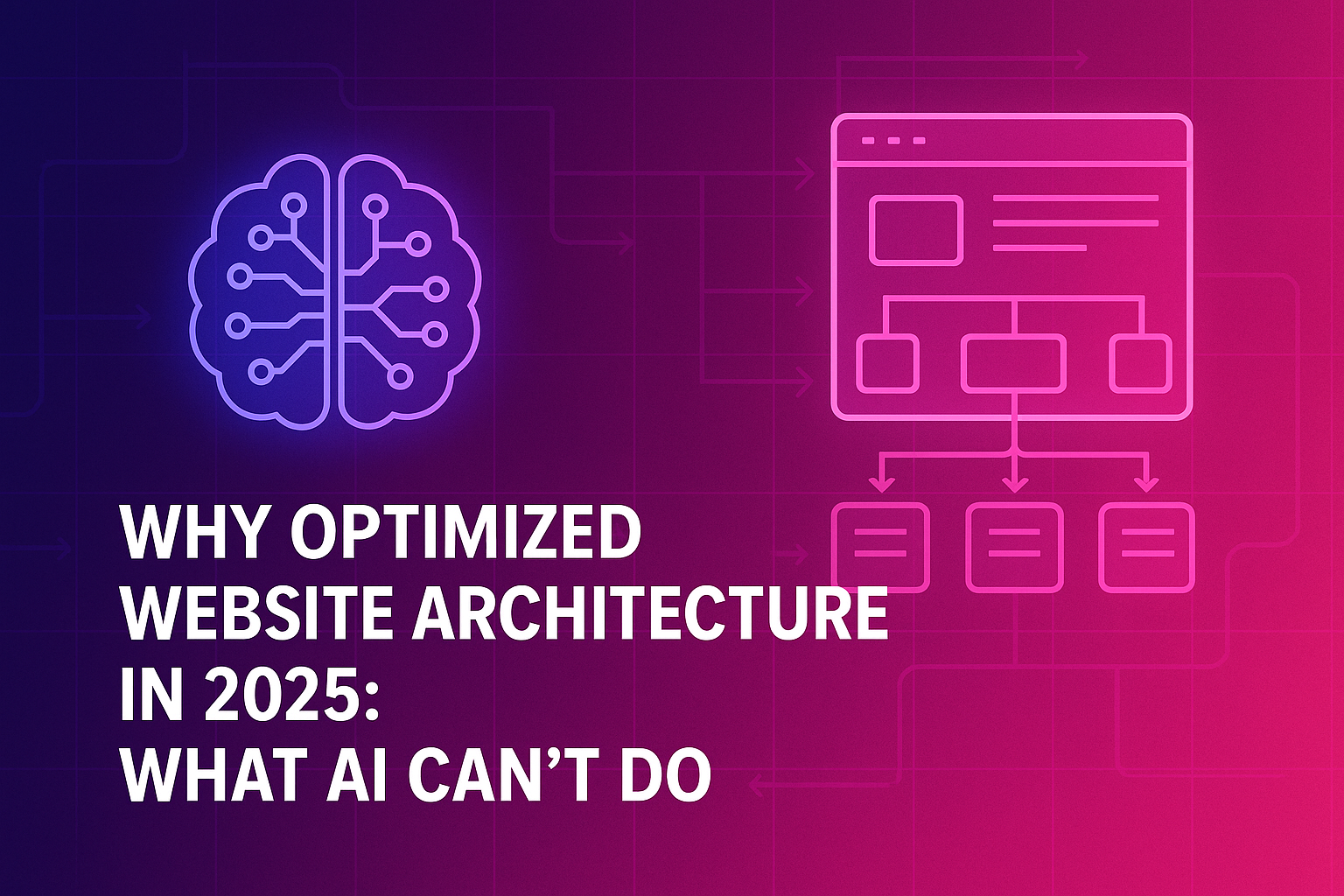
- Content pillars over single keywords: Build comprehensive topic clusters consisting of one central pillar page that offers a master overview of a subject, surrounded by shorter sub-pages that answer highly specific, natural-language customer questions. This satisfies traditional search algorithms by building deep topical authority, while giving AI models the perfect map to answer highly conversational, multi-layered user prompts.
- Technical precision: If your background code is messy, AI crawlers will look right past you. You must double down on advanced JSON-LD Schema markup, specifically implementing Organization, Product, FAQ, and Article schemas. Explicitly tagging your prices, features, and specifications in the backend code acts as a machine-readable cheat code for AI search models.
- Ditch the fluff: Expert quotations, unique proprietary data, and clear phrasing can significantly boost your AI citation visibility. Stop publishing generic, easily duplicated marketing copy and lean more into original surveys, custom charts, and internal case studies. By providing undeniable proof of your authority, you satisfy the AI engine’s need for a secure, hallucination-free answer and give the human searcher the exact real-world validation they require.
Let Us Help Improve Your AI SEO
Looking for some assistance in optimizing your digital content to show up well in AI SEO results? The team at GYBO Marketing can help. Contact us today!